

You do not need a gym membership to feel strong again. You do not need fancy equipment either. With a sturdy chair and a little floor space, you can build real strength. A few minutes a day is all it takes to improve your balance and confidence too. These 10 gentle exercises are used by physical therapists and fall-prevention programs across the country. They work. And you can start today.
Why Strength Training Matters After 60
Something happens quietly as we age. Without regular exercise, adults can lose a meaningful amount of muscle each decade, and this speeds up after 60. Bone density can drop too, especially for women in the years after menopause. Your metabolism can also slow down, which makes it easier to gain weight even if you eat the same as always.
This is not bad luck. It is what happens when muscles are not used. The good news is that this process can be slowed, and even reversed, at any age. Strength training rebuilds muscle, strengthens bones, boosts your metabolism, and helps you stay steady on your feet.
Falls are the leading cause of injury for older adults. About 1 in 4 seniors fall each year, according to the CDC. But research shows that targeted exercise can lower that risk in a big way. Strong legs, a strong core, and good balance are your best defense.
How Much Exercise Do You Actually Need?
The Centers for Disease Control and Prevention (CDC) has clear guidelines for adults 65 and older. Here is what they recommend each week:
- At least 150 minutes of moderate activity, such as brisk walking. That works out to 30 minutes a day, 5 days a week.
- Or 75 minutes of vigorous activity, like hiking, if you prefer a faster pace.
- At least 2 days of muscle-strengthening exercises, like the ones in this article.
Right now, most seniors do not meet these goals. That means most people have room to add a little more movement. The good news is that you do not have to start big. Even 10 minutes at a time counts, and it all adds up.
Before you start any new exercise routine, talk with your doctor. This is especially important if you have a heart condition, joint problems, or have not exercised in a while.
10 Gentle Exercises to Build Strength at Home
These exercises use your own body weight and a chair. No equipment is required, though a resistance band can add extra challenge later.
1. Chair Rises
Sit near the front of a sturdy chair. Cross your arms over your chest, or hold the chair’s arms for support. Stand up slowly, then sit back down with control. This move strengthens your thighs and buttocks, and it mimics a movement you do every day. Try 10 reps.
2. Standing Leg Lifts
Stand behind a chair and hold the back of it for balance. Lift one leg out to the side, keeping your back straight. Lower it slowly. This builds hip and leg strength, which helps with balance. Do 10 to 15 reps per leg.
3. Shoulder Blade Squeezes
Sit or stand tall. Pull your shoulder blades together, as if you are pinching a pencil between them. Hold for 3 seconds, then release. This simple move strengthens your upper back and improves posture. Try 10 reps.
4. Abdomen Pulses
Sit tall in a chair. Gently pull your belly button toward your spine, without holding your breath. Hold for 5 seconds, then relax. This builds core strength, which supports almost every other movement you make.
5. Wall or Chair Push-Ups
Stand facing a wall, or place your hands on a sturdy chair seat. Bend your elbows to lower your chest toward the wall or chair, then push back. This strengthens your chest, shoulders, and arms without stressing your wrists.
6. Marching in Place
Hold onto a counter or chair if you need extra support. Lift one knee up, then the other, like a slow march. This gets your heart rate up gently and works your hip flexors and core.
7. Heel-to-Toe Walk
Walk in a straight line, placing the heel of one foot directly in front of the toes of the other. Use a wall or counter nearby for support if needed. This trains your balance and coordination.
8. Resistance Band Rows
Loop a resistance band around a doorknob or sturdy object. Sit or stand facing it, holding one end in each hand. Pull the band toward you, squeezing your shoulder blades together. Resistance bands cost about $5 to $15 and pack flat for travel.
9. Wrist and Ankle Circles
Sit comfortably. Rotate each wrist slowly in one direction, then the other. Do the same with your ankles. These small movements keep your joints limber and can ease morning stiffness.
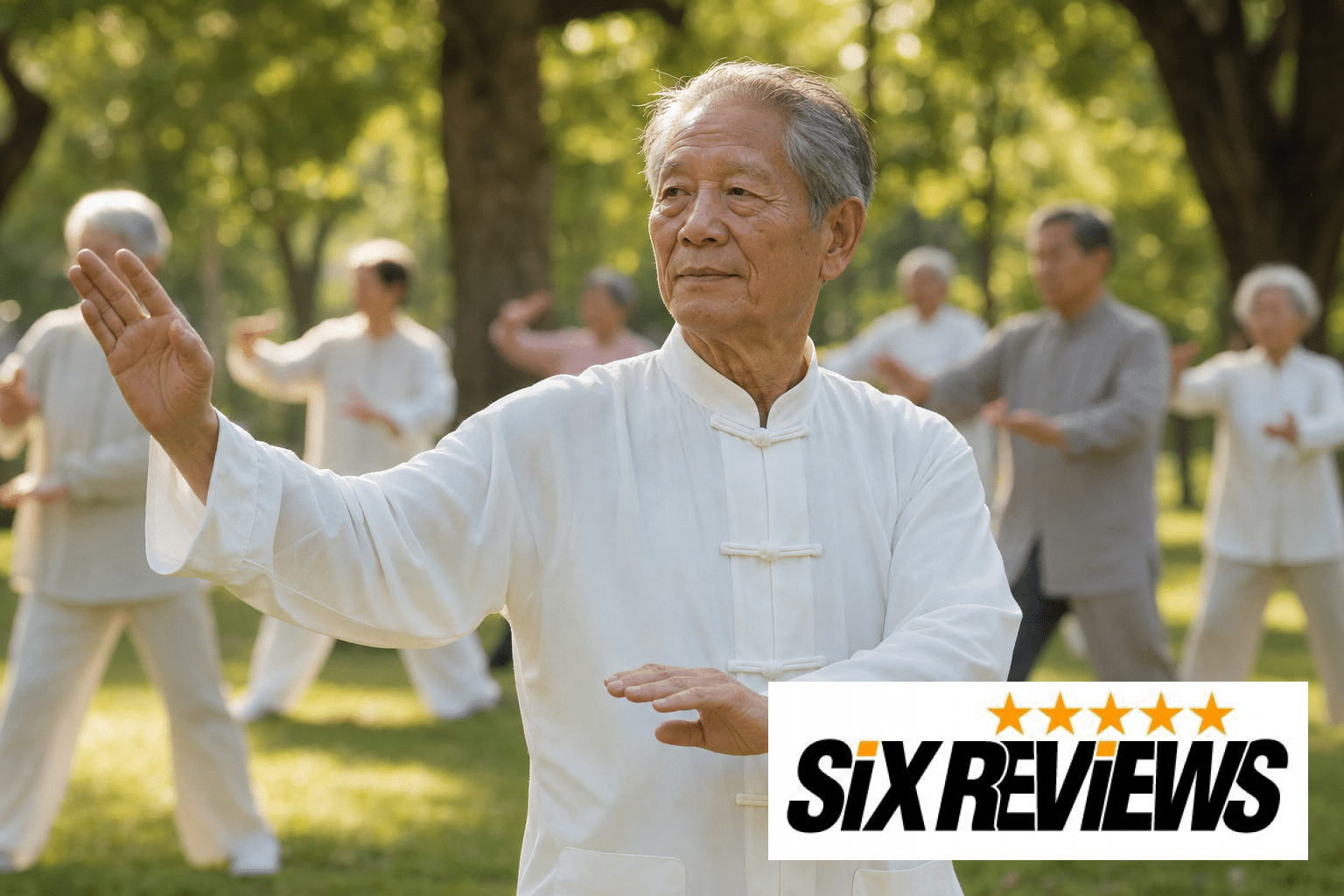
10. Tai Chi Flow
Tai Chi uses slow, flowing movements to build balance, flexibility, and calm focus. Just 15 to 20 minutes a day can lower your fall risk over time. Many community centers and senior centers offer free or low-cost Tai Chi classes.
Safety Tips Before You Begin
Starting something new can feel a little intimidating. These tips will help you exercise safely and build confidence.
- Warm up first. A few minutes of easy walking or arm circles gets blood flowing to your muscles.
- Start slow and add more over time. Consistency matters more than intensity.
- Keep a sturdy chair or counter nearby for balance during standing exercises.
- Wear supportive, non-slip shoes, even at home.
- Breathe normally throughout each move. Do not hold your breath.
- Expect some mild muscle tiredness the next day. That is normal.
- Stop right away if you feel sharp or sudden joint pain. That is a warning sign, not something to push through.
Check with your doctor before starting any new exercise program. This matters most if you have a chronic health condition. It also matters if you take medication that affects your balance or heart rate.
Gentle Options for Arthritis or Joint Pain
If you live with arthritis, exercise might sound like the last thing you want to do. But moving regularly actually helps. It strengthens the muscles around your joints, which eases pain and stiffness over time.
Try Water Exercise
Water aerobics and swimming are excellent choices if your joints are sore. The water supports your body weight and can reduce stress on your joints by up to 50%. Many local pools and community centers offer senior water aerobics classes.
Aim for Short, Frequent Sessions
If you have arthritis, aim for 20 to 30 minutes of gentle activity on most days. You do not have to do it all at once. Three 10-minute sessions work just as well as one long one.
How Often Should You Exercise?
You might think more is always better, but that is not quite true for strength training. Research on older adults found that training twice a week builds just as much muscle as training three times a week. You do not need to exercise every day to see real results.
A simple weekly plan might look like this:
- 2 to 3 days of strength exercises from the list above.
- 5 days of light aerobic activity, like walking, for 30 minutes.
- Daily stretching or Tai Chi, even just 10 to 15 minutes.
- At least 1 full rest day to let your muscles recover.
Rest days are not lazy days. Your muscles actually grow stronger during rest, not during the exercise itself.
What Results Can You Expect?
Real change takes a little patience, but it comes faster than most people think.
- 2 to 3 weeks: You may notice less morning stiffness and a bit more energy.
- 4 to 6 weeks: Balance often improves, and daily tasks like climbing stairs feel easier.
- 8 to 10 weeks: Many people notice real, visible muscle gains and feel noticeably steadier on their feet.
- 12 to 16 weeks: Strength gains, better posture, and improved confidence tend to fully take hold.
It is never too late to start. Studies show that people in their 70s, 80s, and even 90s build real strength and muscle when they train consistently. Your age is not a limit.
Key Takeaways
- Aim for 150 minutes of moderate aerobic activity and 2 or more days of strength training each week, per CDC guidelines.
- You only need a chair, your body weight, and a little space to get started.
- Training 2 to 3 days a week builds just as much strength as training every day.
- Water exercise and Tai Chi are gentle, effective options if you have arthritis or joint pain.
- Sharp joint pain means stop and rest, but mild muscle tiredness is a normal part of getting stronger.
- Results often begin within 4 to 6 weeks, with noticeable muscle gains by 8 to 10 weeks.
- Always check with your doctor before starting a new exercise routine.
Frequently Asked Questions
How quickly will I see results from these exercises?
Most people notice better balance and energy within 4 to 6 weeks of consistent effort. Real muscle gains tend to show up by week 8 to 10, if you train 2 to 3 times a week.
I have arthritis. Are these exercises safe for me?
Yes. Water aerobics, Tai Chi, and gentle stretching are often recommended specifically for sore or arthritic joints. Move at your own pace, expect a little discomfort at first, but stop if you feel sharp pain.
Do I need any equipment to get started?
No. Most of these exercises only require a sturdy chair and your own body weight. A resistance band costs about $5 to $15 if you want to add more challenge later. Pool access, if you want water exercise, is often available at community centers.
How often should I exercise each week?
The CDC recommends 5 days of light aerobic activity plus 2 or more days of strength exercises. Rest days matter too, since your muscles rebuild and grow stronger while you recover.
Is it too late to start if I am in my 70s or 80s?
Not at all. Research consistently shows that older adults, even those in their 80s and beyond, gain real strength and muscle from regular exercise. Many people notice results within just 4 to 6 weeks of starting.
Every strong body started with one small step. Pick just one exercise from this list and try it today. Your future self, steadier on the stairs and stronger in the garden, will thank you.
