

Cooking for yourself, or just for two, can feel like a chore nobody warned you about. Recipes make eight servings. Grocery bags come in family sizes. And some nights, a whole meal feels like too much work. It just does not seem worth it for one person. But it does not have to be that way. With a few smart habits, you can eat well and waste less food. You will also spend less time standing at the stove.
Why Small-Household Cooking Feels Harder Than It Should
Most grocery stores and recipes are built for big families. That is not your fault. It is not something you have to live with either. Once you learn a few simple tricks, cooking gets easier over time, not harder. Shop smaller. Cook in batches. Lean on a few simple meal formulas.
Always check with your doctor before making big changes to your diet. This matters most if you have diabetes, high blood pressure, or another health condition.
What Your Body Needs Now
Your nutrition needs do not shrink just because your household did. In fact, some needs go up.
Calories and Protein
According to the American Heart Association, women 60 and older need about 1,600 to 2,200 calories a day. Men 60 and older need about 2,000 to 2,600 calories a day. Your metabolism slows with age, but your body still needs the same nutrients, or more. That means every meal should work hard for you. Protein is especially important. It helps you keep muscle, which supports balance and strength.
Calcium, Fiber, and Vitamin C
These three nutrients matter more as you age:
- Calcium: Aim for 1,200 mg a day to protect your bones and lower your risk of osteoporosis.
- Fiber: Women over 50 should get about 22 grams a day. Men should get about 28 grams a day. Fiber supports digestion and heart health.
- Vitamin C: You need 90 mg a day. It supports your immune system, which can weaken with age, and helps wounds heal.
You do not need to count every gram. Just build meals around protein, vegetables, and whole grains. Add a little dairy or a calcium-rich substitute. That covers most of your bases.
Shop Smart: Buy Only What You Need
One of the biggest reasons small households waste food is simple. The packages are too big. A family-sized bag of salad greens looks like a bargain. So does a five-pound pack of chicken thighs. But they are only a bargain if you eat them before they spoil.
Write a List With Quantities
Instead of writing “salad greens,” write “salad greens, enough for two lunches.” Instead of “chicken,” write “chicken breasts (2).” This small habit keeps you from overbuying and keeps your grocery bill predictable. Susan, 65, shops this way every week. Her list looks something like this:
- Chicken breasts (2)
- Frozen broccoli (one bag)
- Brown rice (1 cup dry)
- Eggs (1 dozen)
- Greek yogurt (one small container, for 3 breakfasts)
- Salad greens (one bag, for 2 lunches)
She sticks to a $35 to $40 weekly budget. She freezes half the chicken for the following week. She rarely throws anything away.
Use the Deli and Freezer Aisle
Pre-made salads and heat-and-eat deli entrees are already portion-controlled. On days when cooking feels like too much, these are a smart, healthy shortcut. Frozen and pre-cut vegetables are another good option. They cut down on prep time and reduce strain on your hands. They also will not spoil in your crisper drawer before you get to them.
If you buy a larger package of meat on sale, divide it into smaller portions right away. Wrap or bag each portion for one or two servings. Freeze what you will not use in the next day or two.
Batch Cook Once, Eat All Week
Batch cooking is the single biggest time-saver for anyone cooking for one or two. Spend one afternoon cooking, and you can set yourself up with meals for weeks.
How It Works
Most cooked soups, stews, and casseroles freeze safely for 3 to 6 months. That means one weekend of cooking can fill your freezer with four or more weeks of ready-to-heat dinners. Here is how Margaret, 68, does it:
- She makes a large pot of minestrone soup, freezes three portions, and keeps one in the fridge.
- She roasts a sheet pan of chicken breasts with carrots and potatoes, then freezes half.
- She makes a slow cooker beef stew and freezes it in five single portions.
She labels every container with the date and what is inside. Over the next four weeks, she pulls out one meal each weeknight. She reheats it in the microwave in about three minutes. That means she skips the daily cooking grind entirely.
Try Component Prepping
Eating the same frozen casserole four nights in a row gets old fast. Instead, try cooking parts of meals separately. Cook a batch of protein, a batch of grains, and a batch of roasted vegetables. Freeze each one in its own container. On any given night, you mix and match. This keeps meals interesting without extra work. You are not cooking anything new, just combining what you already made.
Label Everything
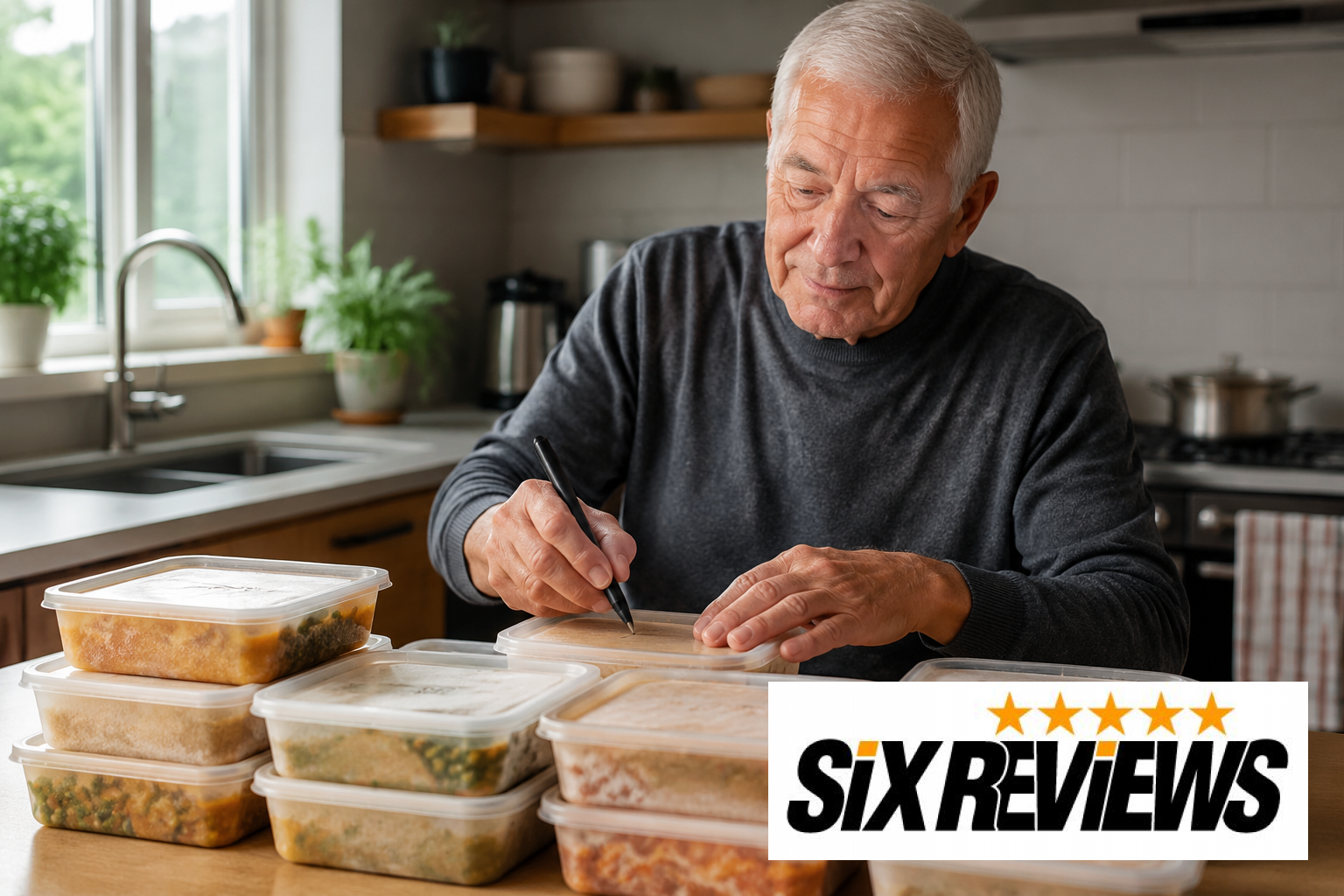
Use single-serving containers so you never have to thaw more food than you plan to eat. Write the date and the contents on each one with a marker or a piece of tape. This keeps your freezer organized and helps you use older meals first.
Meal Formulas: One Method, Endless Meals
You do not need dozens of recipes. You need a handful of formulas you can repeat with different ingredients. Here are five that work for almost any meal:
- Roasted protein + steamed vegetable + whole grain. Try salmon, broccoli, and brown rice one night, then chicken, carrots, and quinoa the next.
- Slow cooker braise + bread. Load a slow cooker in the morning with beef, broth, and vegetables. Dinner is ready with almost no effort by evening.
- Sheet pan dinner. Put protein, chopped vegetables, and herbs on one pan and roast. One pan means one cleanup.
- Soft pasta + mild sauce + protein. Easy to chew, easy to make, and easy to swap ingredients.
- Soup or stew + small side salad. A warm, filling main with a light, fresh side.
Each formula supports dozens of ingredient swaps. You are never really cooking the same meal twice. A few easy dishes fit these formulas and take under an hour to make. Try tuna veggie casserole, stuffed sweet potatoes, garlicky roasted eggplant, berry chicken salad, salmon dinners, oatmeal with fruit, or quinoa salads.
If chewing is a concern for you, lean toward soft, easy-to-chew meals. Finely chopped or shredded meats work well. So do well-cooked vegetables and soft grains like rice or quinoa. These choices make eating safer and more comfortable.
Make Your Kitchen Easier on Your Hands
If arthritis or weak grip strength makes cooking painful, the right tools can make a big difference.
Adaptive Tools Worth Owning
- Palm peelers: Easier on your hands than a standard vegetable peeler.
- Food choppers: Cut chopping time and hand strain at once.
- Jar openers and electric can openers: No more fighting with a stuck lid.
- Lightweight cookware: Easier to lift, pour, and carry.
- Built-up or angled utensils: Larger grips help if you have weak hands or arthritis.
Robert, 72, has moderate arthritis in both hands. He bought an electric can opener, a palm peeler, and a food chopper. He now buys pre-cut vegetables for a few extra dollars a week. He also added non-slip mats near the sink and stove. He added a stepstool with a back too, so he can sit while he preps. His slow cooker does most of the work. He loads it in about ten minutes. Dinner is ready by the time he finishes his morning walk.
Let the Slow Cooker and One-Pot Meals Do the Work
Slow cookers are one of the best tools for anyone managing pain or fatigue. Load ingredients in the morning. Dinner is ready by evening with almost no hands-on time. One-pot meals work the same way. Less cookware means less cleanup. That means less standing and less strain on your body.
Set Up Your Kitchen for Easy Reach
Keep the items you use most often at counter level. This cuts down on bending, stretching, and lifting. Those movements can be tiring or risky if your balance or joints give you trouble. A stable, clutter-free workspace with good lighting also makes cooking safer overall.
Cut Food Waste Without Trying Hard
Wasting food is not just wasteful, it is also expensive. A little planning goes a long way.
- Check before you shop. Look through your fridge, freezer, and pantry first. Make a list of what needs to be used soon, and plan your meals around it.
- Stock smart pantry staples. Canned beans, whole grains, olive oil, herbs, and spices last a long time. So does low-sodium broth. They all work in many different meals.
- Keep pre-made salads on hand. They stay fresh in the fridge for a few days. That means less produce goes bad before you get to it.
- Lean on your freezer. Pre-portioned freezer meals help. You are never stuck thinking, “too much to cook, I’ll just skip dinner.” Having something ready to reheat helps you eat better, more often.
Key Takeaways
- Your body still needs plenty of protein, calcium, fiber, and vitamin C, even if your appetite has changed.
- Shop with a detailed list that includes quantities, so you buy only what fits a one or two person household.
- Batch cook once a week and freeze single portions to cover three to four weeks of meals.
- Use five simple meal formulas, like sheet pan dinners or slow cooker braises, and swap ingredients for variety.
- Adaptive tools like palm peelers, food choppers, and electric can openers make cooking easier on painful hands.
- Check your fridge and pantry before shopping, and use freezer meals to avoid skipping dinner altogether.
Frequently Asked Questions
How do I avoid cooking every single day when I live alone?
Pick one day a week to batch cook. Make two or three recipes in double or triple batches. Portion them into single servings and label each one with the date. Then freeze them. This gives you three to four weeks of ready meals from one afternoon of cooking.
What if I have arthritis and find chopping vegetables painful?
Buy pre-cut vegetables from the store instead of chopping them yourself. Adaptive tools like palm peelers, food choppers, and jar openers also help. A slow cooker that needs very little prep work can take a lot of strain off your hands.
I’m worried about wasting fresh produce. How much should I buy?
Buy smaller amounts sized for one or two people. Let your weekly meal plan guide your quantities, such as “salad greens for two lunches.” Frozen vegetables, pre-made salads, and pantry staples like canned beans are good waste-free backups.
Are frozen meals as nutritious as fresh ones?
Yes. Meals that are frozen properly hold onto their nutrients for 3 to 6 months. Freezing often protects nutrients better than letting fresh produce sit in the fridge for a week or two.
What’s a simple meal formula I can use so I don’t get bored?
Try this base formula. Use a roasted or slow-cooked protein, plus a cooked vegetable, plus a whole grain. Add a simple sauce or seasoning. Swap the protein, vegetable, or grain each week. You get real variety without learning a single new recipe.
Cooking for one or two is a skill, and like any skill, it gets easier with practice. Start small. Try one batch-cooking weekend, one new tool, or one simple formula this week. Before long, mealtime will feel less like a chore and more like something you look forward to.
